“You cannot subsidize irresponsibility and expect people to become more responsible.”
—Thomas Sowell
The weekend of September 26, 2026, was something of a perfect storm in the world of gambling. It began with a most interesting article by Jake Pearson in ProPublica. Under the insightful guidance of Isaac Rose Berman, Mr. Pearson entered into an online betting relationship with DraftKings. He mimicked the characteristics of a bettor who was exhibiting the tendencies of an individual losing the battle of having a sane relationship with betting.
The purpose of the ProPublica exercise was to see how DraftKings would react.

Testing a Target
I would guess reporter Pearson’s selection of DraftKings was not purely random, and Isaac may have helped him here. DraftKings has a reputation and, for this exercise, would be considered low-hanging fruit. On February 15, 2025, a story of DraftKings abuse was carried by The Guardian.
One does not need to be an expert in mental illness and addiction to understand that what DraftKings did to Lisa D’Aesandro’s husband was beyond abusive, and it was so obvious that he was a broken person that it could be detected from across the street on a dark night. Subsequent incidents have also shown DraftKings’ insensitivity and its willingness to destroy lives to boost earnings.
Getting back to ProPublica reporter Pearson’sexperience, DraftKings made this individual, who was demonstrating a fairly weak ability to control his gambling impulses, a VIP with his own special host. This was not much of a surprise to anyone who has followed the launch of online sports betting since 2018, when the Supreme Court cleared the path for sports gambling. This new brand of legal sports betting has really expanded the online sports betting market.
A common complaint among sports bettors since the launch of online sports betting is the ban-or-bankrupt model used by companies like DraftKings. This model reflects the reality that highly competent sports bettors end up being dramatically limited (for example, they may be told the maximum amount they can bet is $1.30), while less skilled bettors get dramatically enhanced limits and/or inducements. Ban or bankrupt is wonderful language for the reality of much of the online sports betting scene today, and the technology is well adapted to sorting winners from losers.
Now, doesn’t it seem that the regulators should have done something about this? Well, yes, it probably does.
The regulatory agency I admire most in the U.S. is in Massachusetts. They invited all sports betting operators in their jurisdiction to appear at a fact-finding session to explain betting limits. The industry demonstrated its total lack of respect for this agency by not showing up. Actually, one firm did show up, but it was not yet operating in the state.
So, we see operators apparently cool with destroying people’s lives with bonuses, incentives, and special personal attention when they show a low betting IQ or issues indicative of a loss of self-control, while limiting skilled bettors to pocket change. They can also be complete asses with regulators.
Prediction Problems
Then there are the folks in the prediction markets that are aggressively working to enter the sports betting markets.
These firms are regulated by the Commodity Futures Trading Commission (CFTC), and who hasn’t looked at a pork-belly futures transaction and thought, “This is just like betting on a game between the Jets and the Browns?”
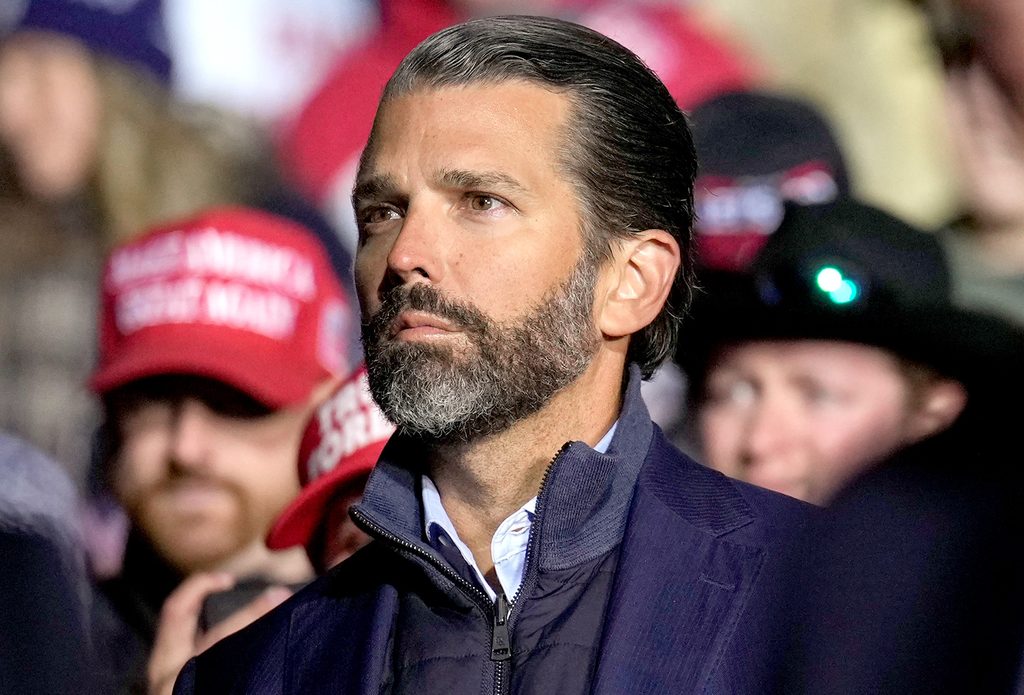
One of the bigger firms in this space is called Kalshi, and they have enlisted a strategic advisor named Donald Trump Jr. Kalshi gave him a $300,000 stake in the company, and apparently his strategic advising was quite good, for in a year the value of that stake is approximately $2 billion.
It is also worth noting that 1789 Capital, where Don Jr. is a partner, has invested $500 million in Polymarket, another large prediction market player. Don Jr. was also appointed as an advisor to that entity.
One does have to be amazed by the talents of the Trump sons. Not only are they acquiring untold wealth because of their insight and understanding of prediction markets and gaming, but they have also generated over $6 billion in investments in defense-related startups.
President Trump appointed the head of the Commodity Futures Trading Commission (CFTC) in 2025. His name is Mike Selig, and he was a crypto regulator. The CFTC is designed to have five commissioners, but Selig is currently the only one on the commission, and there seems to be no hurry to change that.
Moreover, one group generally aggrieved by the prediction operators’ actions is the nation’s tribal governments, and the national entity that oversees them is the National Indian Gaming Commission (NIGC). It has no chair, and there appears to be no rush to appoint one. This weakens the political power of the tribes, and this position is appointed by the president.
President Trump is also the largest shareholder in the public company Trump Media & Technology Group (TMTG). The President’s share in this company is held in a revocable trust, for which Don Jr. is the sole trustee. Within this trust is an entity called Truth Predict as part of Truth Social. This entity is designed to offer prediction markets through crypto transactions.
After the Senate’s recent failure to pass the Crypto Clarity Act, the CFTC announced on October 5, 2026, that the CFTC Chairman is working on a proposal to facilitate crypto assets in prediction markets. This change would allow the President to monetize his current prediction market product favorably within his revocable trust.
What we see looks like related-party conflicted transactions, but the President has suggested that “…Nobody cared.”
Pre-Prediction
What needs to be understood is that even before prediction markets, sports betting was a mess after Murphy v. NCAA. This was basically the result of making betting as close as your phone…and, to an extent, as close as your kids’ phone.
The problem was that we followed a system embraced in gaming regulation for many years: hiring regulators who had no idea how gambling works in reality. That insanity was compounded with the addition of other things that confused regulators following the Murphy decision, namely, adding sports betting and online applications of betting products to the mix.
How comfortable would you be going into open-heart surgery knowing that the folks that wrote the regulations for your surgery copied them from another state, and had never in their lives operated on a heart, or anything else? Welcome to gaming regulation in the United States.
Many regulators have noticed that if they treat the operators well, they may get to walk through the revolving door into the industry. The “capture theory” of regulation is probably one of the only topics that most economists agree on.
Where is all of this leading us? Well, folks, there is a mess around sports betting between athletes and others fixing outcomes – see here, here, and here. That is a bit of a problem, if one considers integrity a nice characteristic
Then, of course, a lot of folks are struggling with gaming as it is delivered online. The number of people adversely impacted by gambling is growing. They are doing things like losing all of their money and killing themselves, for gambling addiction comes with an elevated risk of suicide.
Helping Help Lines
It is certainly a good thing that we have this fine institution known as the National Council on Problem Gambling to help address this situation, and if you run into a problem, just call them at… oh, wait, two of the leading agencies for problem gambling got in a pissing match over the rights to the 800 number…so now we have two. As an aside, a number of gaming firms printed a ton of collateral literature with what was made to be the wrong number on it. Also, for those folks contemplating killing yourself and getting the wrong number, well, hang in there, and they will eventually get it straightened out.
Moreover, the National Council on Problem Gambling, which is funded through industry contributions, opted to accept a $2 million contribution from Kalshi, a company that is part of the problem, in that they found it easier to send a huge check to the NCPG than to employ problem gambling measures. For a mere $2 million, these multi-billion-dollar entities can say, “See, we care.” This started a series of state regulatory and problem gambling entities leaving the organization, showing us that some actually care about problem gambling. Also, since the brilliant decision to embrace Kalshi, the NCPG is also looking for a new leader.
Nevada also doesn’t fully understand one thing: this whole prediction-model thing could hurt markets…like Las Vegas.
Derek Stevens is an entrepreneur’s entrepreneur. He built a casino in Las Vegas dedicated to sports bettors. He and his team originate lines, offer high limits, run dozens of bettor-centric promotions, and built a store designed to offer everything a bettor could want.
Stevens also hosted Donald Trump at his casino, a decision that can alienate a part of his market — but he did it because it was the right thing to do. Now Trump, with his hell-bent focus on monetizing prediction markets for himself and his family, is threatening Derek’s whole model.
If this prediction-market thing continues, a lot of downtown Las Vegas’s energy will be gone. That seems to be the deal.
I don’t think Trump cares, but Las Vegas should. And when bettors lose a place like Circa where they can gather and be appreciated, well, they only have themselves to blame.
But the biggest tragedy of all of this is that America’s kids are being damaged, and people who should care don’t. Also here. Many children today (especially males) spend more time on their phones than with their parents, and the message now from their sports heroes on those phones is that real men bet.

Responsible Outlook
The point is that responsible gambling matters. Unfortunately, too few responsible adults are in the business to embrace a competent, responsible model.
The regulators also own this reality. Regulators need to understand that lives are being ruined while they walk around dazed and confused, attending conference after conference, talking about what a great job they are doing with a topic they do not understand. And they are hopelessly behind.
In the late 1970s, I spent several years working on a dissertation on the early development of the Nevada Gaming Control Board. I was able to talk with the people who were there, hold the documents, and hear the stories. The whole point of the many men and women involved in this effort was to make the industry sustainable. That was a very responsible thing to do. This existing nonsense is not sustainable, and it certainly isn’r responsible.
One of my core beliefs about gaming regulation is that it needs an engaged press. Nevada operators have worked against this notion in numerous ways, including lawsuits that financially destroyed reporters even when they won, and by secretly buying the state’s largest newspaper.
That reality makes me realize that, since the ProPublica article of September 26, I have been contacted by many in the national press, or heard from other sources, about what is going on in gaming today…and, as best I can tell, there are no heroes in those stories. Look for a lot more stories from large news-publishing houses. Moreover, they do not have much good to say. In other words, it seems they got it right.
The good news is that they are supporting responsible gambling.