

“Let the word go forth from this time and place, to friend and foe alike, that the torch has been passed to a new generation of Americans”
- John F. Kennedy, Inaugural Address, 1961.
David Hill, a noted gambling writer and historian, invited me to join a sports-betting podcast a few years back. It was to be held at a studio in Brooklyn, New York. I left central Pennsylvania by Amtrak, headed to Penn Station, then took a cab to the studio. When I arrived at the studio, I met another individual, Isaac Rose Berman, who was also involved in the podcast.
The first thing I noticed about Isaac was that he looked quite young; he was 24 at the time. Secondly, during the recording, I noted he was an excellent speaker and clearly quite intelligent. Strikingly so. More importantly, he was not just factual and informed; he conveyed wisdom as he discussed sports betting.

Isaac is a graduate of Brandeis University in Waltham, Mass. He comes from good stock, one might say, with his father, Gideon Rose, a longtime member of the Council on Foreign Relations and editor of Foreign Affairs. Isaac’s father received his undergraduate degree from Yale and his Ph.D. from Harvard. He has also contributed to an extensive number of publications. Isaac’s mother is a professor of Poly Sci at Barnard College at Columbia University, and she earned her MA and Ph.D. from Harvard and has a strong publishing record.
Converging Conference
Several months after the podcast, I received a note from Arik Burakovsky, the associate director of the Center for Expanding Viewpoints in Higher Education (CEVIHE) at Tufts University. I did not know Arik and was a bit surprised when he invited me to attend a two-day conference on gambling, recreational drugs, and pornography, to be held at the Tufts campus in Boston. I accepted.

During this event, I again had the opportunity to hear Isaac Rose Berman speak, and he continued to impress me with his insight and wisdom. I also met another attendee and speaker whom I found most impressive: Jonathan D. Cohen. Jonathan was also young, being but a decade older than Isaac.
During this conference, I noted that both Isaac and Jonathan referred to their work with the American Institute for Boys and Men (AIBM). Intrigued, I began searching to learn more about the organization.
I found the AIBM fascinating because I had never heard of it until Isaac and Jonathan brought it to my attention. I was particularly attracted to the Mission Statement of the entity:
“The American Institute for Boys and Men conducts non-partisan research on issues that affect the well-being of boys and men across the United States and designs programs and policies to help them thrive.”
My favorite line of the Mission Statement is “…to help them thrive.”
I would also suggest that, if there is something good in this article, the reader set aside some time to look over the AIMB website, for there is much good in it.
Vegas Bound
Following the trip to Boston, I returned to Las Vegas. I was preparing to attend UNLV’s International Conference on Gambling and Risk Taking. I noticed that Jonathan D. Cohan was planning to attend, and I wanted to interview him to better understand someone doing interesting things in the betting space.
While researching Jonathan, I learned he earned his Ph.D. in history from the University of Virginia. I also learned that his father, Shaye J. D. Cohen, is recognized for an impressive career as a leading scholar and thinker in religion at Harvard.
Jonathan received a William R. Eadington Fellowship from the University of Nevada, Las Vegas, in 2015. While there, he teamed up with scholar David Schwartz, and the two set out to co-edit a series of articles on the spread of gambling. They called the effort All In, and it is an excellent read.
A chapter that Jonathan penned in All In was “Something for Nothing – the fiscal Alchemy of Lottery Legalization.” Jonathan’s research for this chapter was extensive and commendable. Jonathan’s effort in this chapter was to dispel any notion that the introduction of a lottery in New Jersey was a “miraculous panacea” and an “economic elixir” that would solve New Jersey’s fiscal challenges without any negative implications involving the populace.
Basically, Jonathan is not buying this, and he is not buying it because he has a ton of studies, facts, and figures to indicate that politicians lie and will sell their souls, that lobbyists spew made-up gibberish, and that private companies will lie like a dog to open up a gambling franchise. Moreover, if anyone is hurt, we can be thankful it is most likely to be the poorer and most disadvantaged in our society. That is, those without a voice.
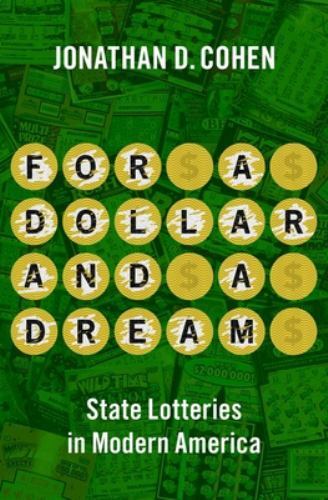
Jonathan also published For A Dollar and a Dream, where he expands on the chapter he wrote in All In. His work here is much more directed toward what he sees as the elements around gambling that have no moral code: politicians, lobbyists, and operators. He followed this book with Losing Big, where he focuses on sports betting. He suggests that the isolation associated with COVID, Murphy v. NCAA, the ease of access to digital products, a heightened understanding of how to enhance engagement loops and time on device, crypto, and President Trump have all added to create a perfect storm of events that has allowed sports betting to get out well over its skis.
When I met up with Jonathan in Las Vegas, he made a statement that perfectly defined who he is: “I’m the kind of guy who, for better or for worse, will beat a topic to death to discover something about myself.” From all of my interactions with Jonathan, I can attest that this is highly accurate.
Isaac gained some notoriety for helping ProPublica writer Jake Pearson design a betting pattern that would mimic a person with a disordered approach to gambling. Apparently, he did an excellent job, and Jake was made a DraftKings VIP.
To get a sense of who Isaac is, I suggest you look at his writings here. And here.
Regarding Jonathan, one should look here and here.
Moral Duty
Isaac and Jonathan are very different people, but they share something critically important: a strong moral code. What they have taught me is substantial. One of the first things that they really brought to my attention was the game-changing nature of delivering gambling products over the phone.
I am not around many young people. I never had kids, and I just don’t understand what being a kid for the last 20 or 30 years has been like. Jonathan and Isaac have taught me that a kid’s life is all about the phone. More specifically, younger people today spend more time interacting with their phones than with their parents.

Moreover, the phones teach them a great many things. For males, it is customary to have athletes who are role models. And what are those athletic role models telling the kids of today? They are saying, “Go bet.” The “Go bet” message is a billion-dollar message sent to the children of America by its athletic superstars and the betting companies, and it clearly reflects what is shaping masculinity in our world today. What Isaac and Jonathan have taught me is that we can do better. Moreover, we should.
One last publication that Jonathan helped create was the book Long Walk Home, an anthology of articles on Bruce Springsteen, co-edited with June Skinner Sawyers. In the introduction, the co-editors note an interview by PBS in which Springsteen noted: “When you’re playing, you hope somebody hears your voice, is interested in what you’re doing, and then gathers whatever they think might be of value in it and then moves it down the line.”
My vision is that this is what Jonathan and Isaac are doing. These two dramatically different people are making a clear statement that the betting companies and their armies of lobbyists, regulators, and other hangers-on should not be the ones raising our kids.
And yet, here we are…
You don’t build an industry by eating the young.