One concept from sociology that rarely appears in gambling research is the idea of the “third place.” Sociologist Ray Oldenburg used the term to describe the informal places between home and work where people gather, develop routines, see familiar faces, and build a sense of belonging. Cafés, pubs, libraries, community centres, barbershops, and sports clubs can all serve this function.
Oldenburg’s third places are usually accessible and informal. People can come and go without an invitation. Conversation matters. Regulars give the space its character, but newcomers are not necessarily excluded. Most importantly, people do not visit only to complete a transaction. They return because the place itself has become part of their social life.
That raises an interesting question for gambling: for some people, is gambling less about gambling than about having somewhere to go?
The Wager May Be Only Part Of The Experience
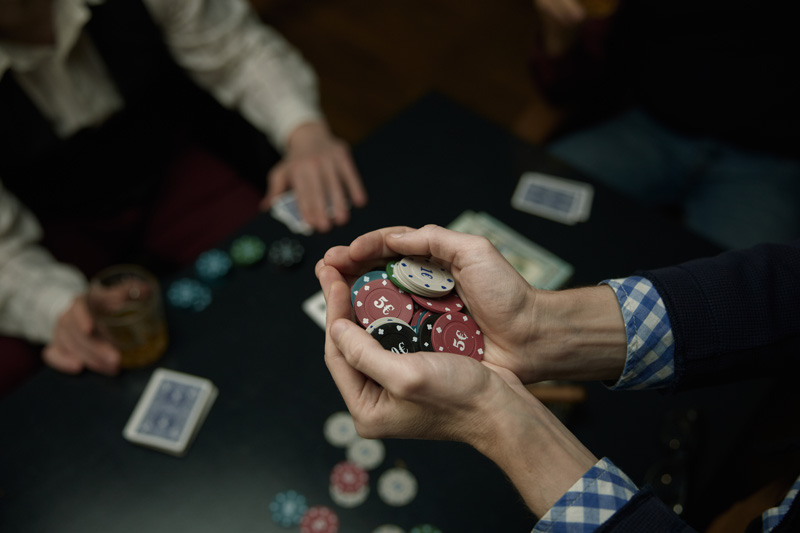
Historically, bingo halls, casinos, racetracks, betting shops, and poker rooms have often functioned as social environments. People meet friends, talk with staff, recognize other regulars, share stories, celebrate wins, commiserate over losses, and develop rituals around when they attend and where they sit. Someone may describe themselves as a poker player or a sports bettor, but that identity can encompass much more than the act of wagering.
A casino is not a perfect third place. Participation can be costly, the commercial purpose is obvious, and the gambling product remains central. Yet many gambling venues reproduce several features Oldenburg associated with third places: familiar regulars, playful conversation, routine attendance, weak social ties, and the feeling of being known. Even brief interactions can matter, particularly for people whose lives offer few other opportunities for connection.
This does not mean social connection makes gambling harmless. It means the social function of gambling may be easy to overlook when we examine behaviour only through expenditure, frequency, or diagnostic symptoms. Two people can display similar patterns of play while receiving very different things from the experience. One may be pursuing excitement or money. Another may be preserving a weekly routine, an identity, or one of the few remaining places where somebody knows their name.
What Changes When Gambling Moves Online?
The growth of online gambling is often described as a change in access, speed, convenience, and product availability. It is all of those things. But it may also represent a change in social architecture.
Moving a familiar gambling activity onto a phone removes much of the physical environment surrounding it. There is no journey to the venue, no conversation with the person at the next table, no coffee with a friend between games, and no natural closing time created by leaving the building. The gambling product becomes easier to access while the surrounding social experience becomes thinner.
Online communities can still provide belonging. Poker groups, sports-betting communities, livestreams, chats, and social platforms can develop regulars, shared language, status systems, and friendships. Research on online games has shown that virtual environments can sometimes perform third-place functions. But online gambling can also produce an unusual combination: constant access to the product with less access to the social contact that once accompanied it.
That distinction matters. If social connection was one reason a person gambled, digitizing the activity may preserve the behaviour while removing part of what made it socially valuable. The result may be more isolated play, fewer natural pauses, and a greater concentration on the wager itself.
What Are People Actually Losing?
This perspective also changes how we think about prevention, self-exclusion, and recovery. We understandably focus on what a person needs to stop or reduce: losses, chasing, concealment, debt, time spent gambling, and other harms. But behavioural change also creates losses of its own. A person may lose a social network, a weekly destination, a familiar role, or an identity built over many years.
If those losses are treated as incidental, we may leave an important need unmet. Telling someone to stay away from a casino is easier than helping them find another place where they feel welcome. Replacing gambling expenditure is one task. Replacing community is another.
Programs such as Libraries After Dark in Victoria, Australia, are instructive because they did more than warn people about gambling. They created free evening spaces where people could participate in social and creative activities. The intervention offered something, rather than merely asking people to give something up. Its underlying insight was simple: sometimes people need an appealing place to go.
A Broader Research Agenda
The gambling literature already examines social influence, gambling networks, loneliness, social support, and belonging. Research also recognizes that recovery is strengthened by supportive relationships and meaningful alternative activities. Third-place theory could help connect these findings into a more explicit account of place, routine, and identity.
Researchers might ask which gambling environments function as third places, for whom, and under what conditions. Do regular venue visitors report greater belonging than people who gamble primarily online? Does moving online change the relationship between gambling and loneliness? How much of a self-described gambling identity is tied to the activity, and how much is tied to the community surrounding it? When people reduce or stop gambling, which social functions are hardest to replace?
These questions are not an argument for preserving harmful gambling environments. They are an argument for understanding the full role those environments play. If gambling sometimes meets needs for routine, recognition, and belonging, effective responses must consider more than the removal of risk. They must also consider the creation of alternatives.
Perhaps the most useful question is not simply, “Why does this person gamble?” It may be, “What place (or function) does gambling occupy in this person’s life, and what would have to exist for that place to be filled differently?”
References
Oldenburg, R. (1989). The great good place. Paragon House.
Steinkuehler, C. A., & Williams, D. (2006). Where everybody knows your (screen) name: Online games as ‘third places.’ Journal of Computer-Mediated Communication, 11(4), 885–909.
Victorian Responsible Gambling Foundation. (2024). Libraries After Dark: Final report and recommendations.
Dr. Travis Sztainert is director of research and education at the International Center for Responsible Gaming and an adjunct research professor in the Department of Psychology at Carleton University. His work focuses on gambling-related harm, responsible gambling and player protection, knowledge translation, and improving the connection between research, policy, and practice. He is particularly interested in emerging gambling products, innovative approaches to prevention and treatment, and ensuring that gambling policy and responsible gaming initiatives are grounded in high-quality evidence.
Author’s note: The views expressed are the author’s own and do not necessarily reflect those of the International Center for Responsible Gaming (ICRG). This article is based on previous LinkedIn posts and articles by the author.